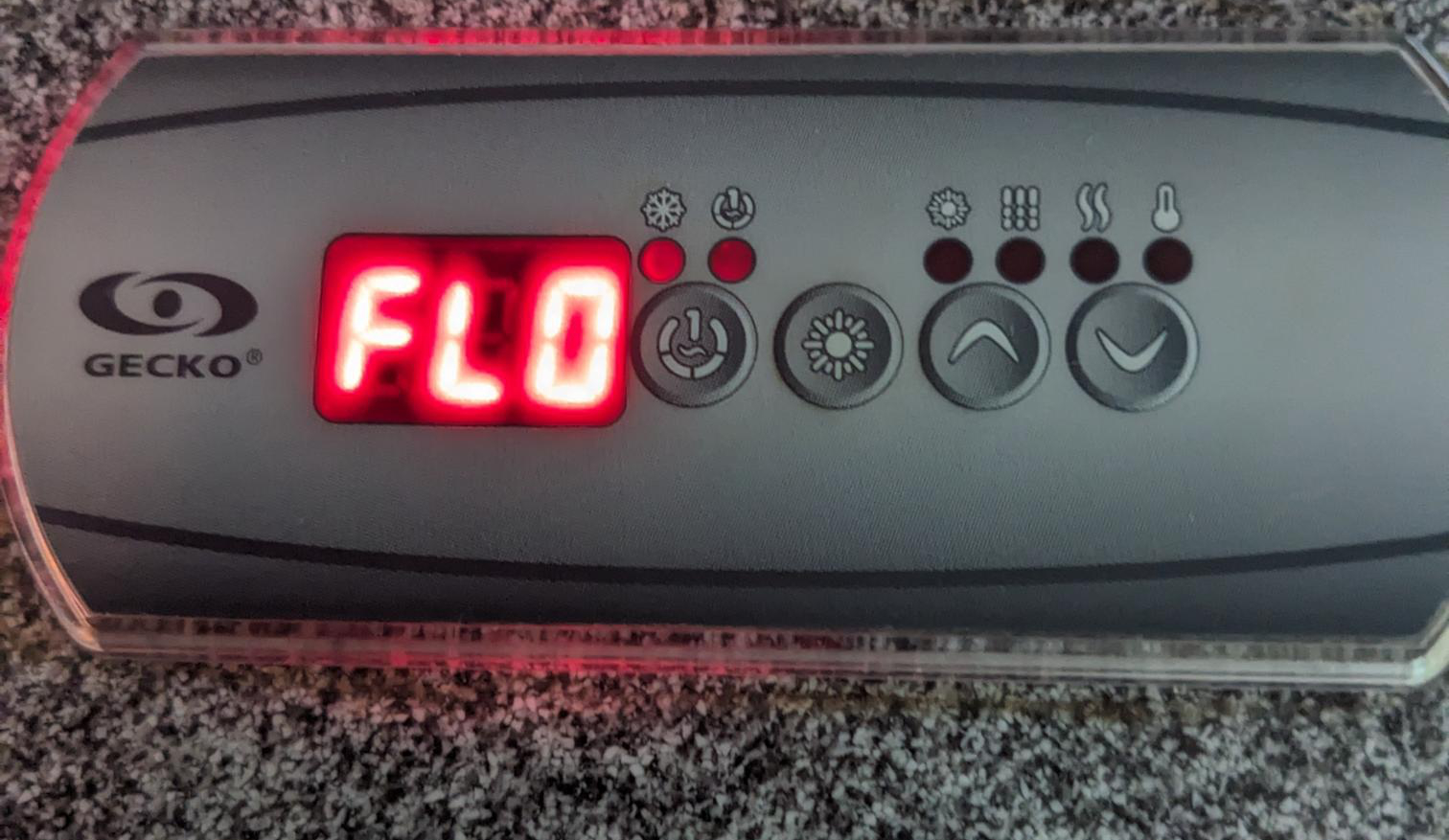
A spa that suddenly displays FLO, OH, DR, SN, or another message is not necessarily facing a major failure. But the message is a warning from the control system that one of the conditions needed for safe operation is missing. Understanding what causes spa error codes can help you respond appropriately, avoid unnecessary damage, and know when a service call is the right next step.
The exact code meanings vary by manufacturer and control pack, so the owner’s manual should always be the first reference. Still, most spa alerts trace back to a short list of operating problems: restricted water flow, sensor issues, pump failures, or electrical problems.
What Causes Spa Error Codes Most Often?
Your spa’s control system continuously monitors water temperature, heater operation, circulation, and electrical safety. When readings fall outside the expected range, the control board may stop the heater or shut down equipment to protect the spa. The code does not always identify the failed part. Often, it is reporting the condition the spa detected.
For example, a low-flow message may appear because of a dirty filter, an air lock, a failing circulation pump, or a plumbing restriction. Replacing a pump before confirming the actual cause can turn a simple repair into an unnecessary expense.
Restricted water flow
Low-flow and dry-heater codes are among the most common problems for hot tubs. A heater needs steady water movement across its element. If the water is not circulating properly, the heater can overheat internally even when the spa water feels cool.
A clogged filter is often the simplest cause. Filters collect debris, scale, and residue from water-care products. When they become restricted, the circulation system may no longer provide enough flow for the heater.
Other flow-related causes include low water level, an air lock after draining and refilling, or a worn out circulation pump. On spas with two-speed jet pumps, the low-speed side of the pump may be responsible for normal heating circulation. If that speed fails, the spa may still produce strong jets on high speed while showing a flow or heating error during low speed operation.
Before restarting the spa repeatedly, check the water level and remove the filters temporarily. If the code clears with the filters out, the filters need cleaning or replacement. If it does not, the problem may be in the pump, plumbing, or control system.
Heater and high-limit problems
An OH, OHH, HFL, or similar overheating message means the spa has detected excessive temperature at the heater. This is a safety shutdown, not a code to ignore or bypass.
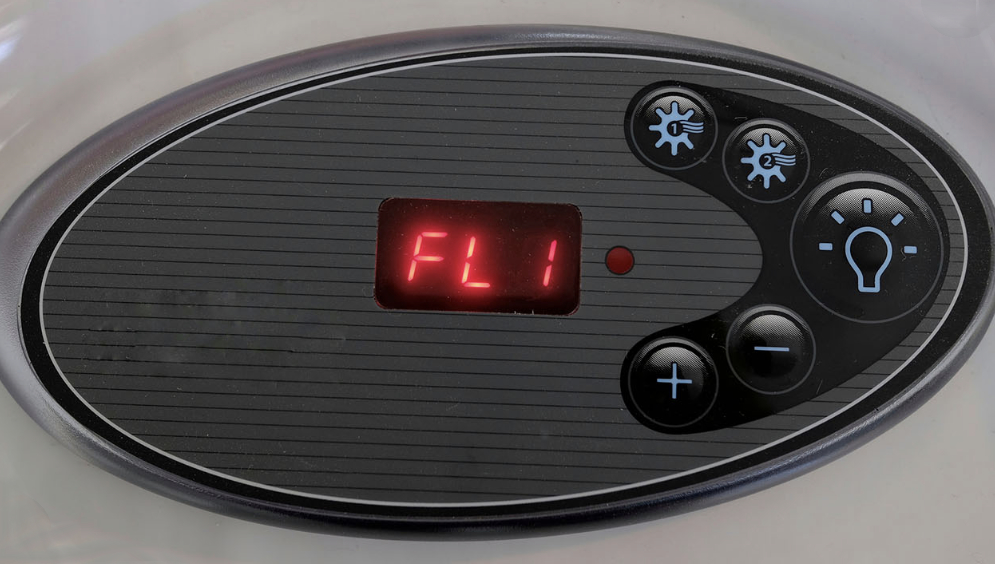
An FL1 Error code on a Jacuzzi can mean a dirty filter, a bad flow sensor or a malfunctioning circulation pump
Sometimes the water is genuinely too hot because the temperature sensor or control board is malfunctioning. More commonly, the heater is getting hot because water flow is inadequate and the water remains in the heater too long and begins to boil.
If the spa has shut down on an overheat code, turn off power at the breaker and allow the unit to cool. Do not keep cycling power to force the heater back on. Repeated overheating can damage the heater, plumbing, and control board.
Temperature sensor faults
Many spas use two sensors to compare water temperature. When those readings do not agree, or when a sensor reads outside its normal range, the control system may display a sensor code such as SN, SNS, or a manufacturer-specific message.
A sensor can fail from age, moisture intrusion, corrosion or rodent damage to wiring. The issue may also be a loose plug at the circuit board rather than the sensor itself.
This is why error-code diagnosis should include testing rather than guessing. A technician can compare sensor resistance, inspect wiring and terminals, verify the board’s response, and determine whether the sensor, heater assembly, or control pack is at fault.
Pump, motor, and circulation failures
Your hot tub depends on pumps for heating, filtration, jet operation, and sometimes blower or waterfall functions. A pump error may present as a code, but it can also show up as a humming sound, no movement in the water, intermittent operation, or a breaker that trips when the pump starts.
A circulation pump can be especially deceptive because it is smaller and quieter than a jet pump. Homeowners may not realize it has stopped until the heater reports low flow or the water temperature drops. When the spa is calling for heat, look for normal movement from the circulation return and listen for unusual noise from the equipment area. Do not open electrical enclosures or handle wiring while power is on.
Control Panel and Communication Errors
A blank topside panel, flashing display, keypad error, or communication message may point to the panel itself, its cable, the control board, or the incoming power supply. Moisture beneath a failing overlay, damaged cable insulation, and corroded connections are common field issues.
Control systems are also sensitive to voltage problems. A spa requires a properly sized dedicated circuit, correct grounding, and a functioning GFCI. Loose breaker connections, a failing GFCI, damaged wiring, or a voltage drop under load can cause confusing intermittent codes. The spa may appear to work until the heater and pump operate at the same time.
When a Code Is Really a Water-Care Issue
Poor water chemistry does not always create an immediate error code, but it can cause the equipment conditions that lead to one. High calcium levels encourage scale on heater elements and plumbing. Low pH or poor sanitizer management can accelerate corrosion. Heavy bather use, oils, and debris can clog filters and reduce circulation.
Water care is therefore part of equipment care. Clean filters monthly, maintain the correct water level, and use a sanitation approach that fits your household and spa manufacturer’s requirements. A chemical-free sanitation option may reduce some routine chemical handling, but it does not eliminate the need to monitor water balance, circulation, and filter condition.
What You Can Check Before Calling for Repair
A few basic observations can make a diagnostic visit more efficient. Confirm the displayed code, note whether the spa is heating or circulating, and check whether the water level is above the filters. Look for visible leaks around the hot tub, unusual pump noise, or a tripped breaker.
Avoid taking apart pumps, bypassing sensors, or replacing parts based solely on an online code chart. Manufacturer codes overlap, and one symptom can have several causes. A FLO message on one model may involve a filter, while on another it may be tied to a pressure switch or circulation pump circuit.
For homeowners in Northern and Central New Jersey, a no-heat or no-circulation alert deserves prompt attention when temperatures are low. A small flow problem can become a heater failure, and a neglected leak can affect pumps, controls, and surrounding equipment. Jersey Hot Tub Repair can diagnose the full system – water flow, heater, sensors, pumps, plumbing, and controls – rather than treating the code as a parts-shopping list.
A spa error code is doing its job when it stops equipment before damage gets worse. Record the message, keep the spa powered down if it is overheating or tripping the GFCI, and have the underlying operating condition checked before returning the tub to regular use.
For more information or to schedule a service call to resolve your hot tub problems, contact us at 201-897-7900. You can also reach us by email through this link.