
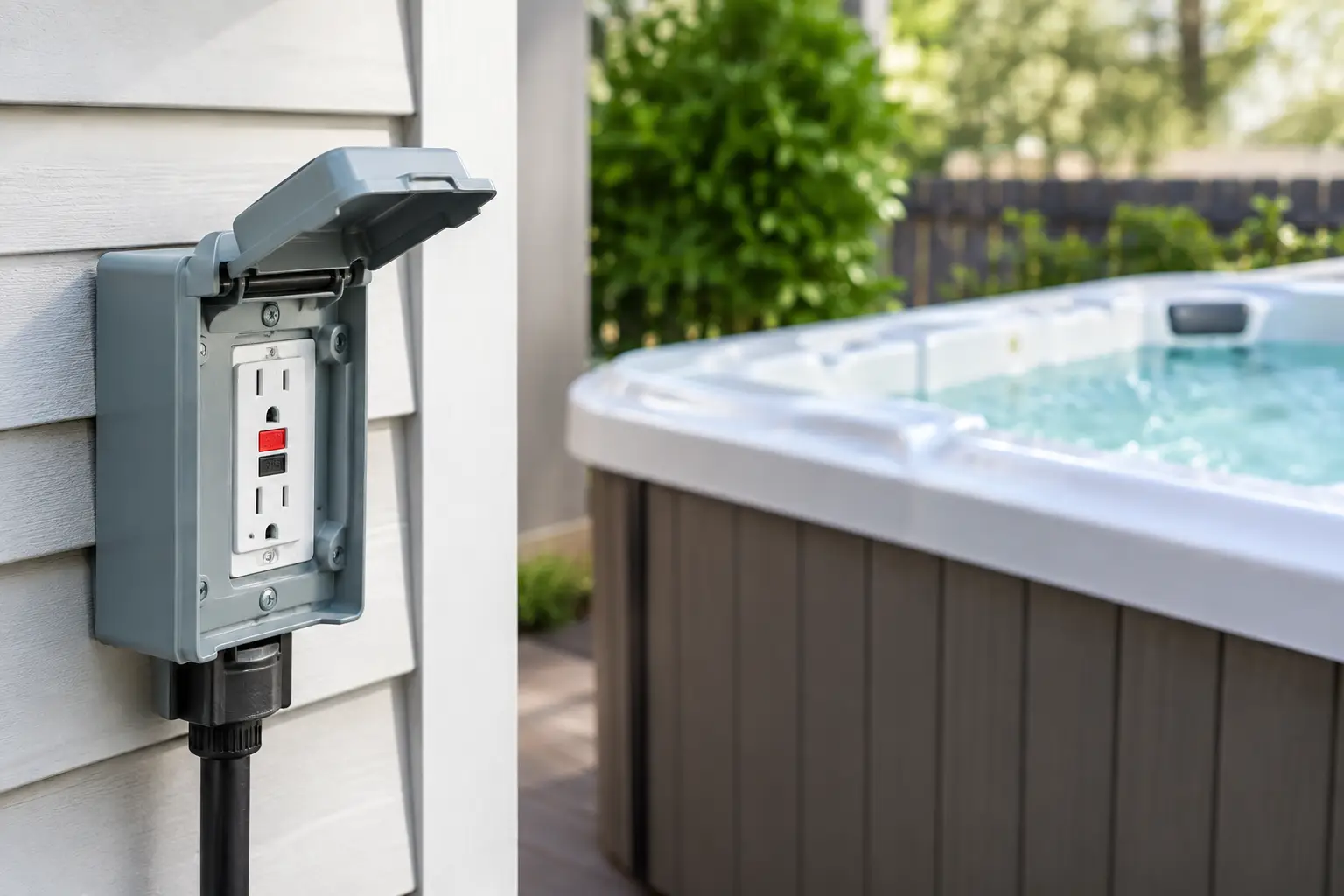
A hot tub that suddenly goes dark, stops heating, or will not circulate may have a spa ground fault. In many cases, the GFCI breaker or disconnect is doing exactly what it is supposed to do: shutting off power when it detects electricity taking an unintended path to ground. That protection matters around water. The priority is not getting the spa restarted quickly at any cost. It is finding the source of the fault and correcting it safely.
For New Jersey homeowners, this issue can be especially frustrating when a spa was working normally and then begins tripping after rain, heavy use, or a temperature change. The fault may come from a component inside the equipment bay, moisture at an electrical connection, damaged wiring, or occasionally the GFCI device itself. Proper diagnosis separates those possibilities without bypassing a critical safety feature.
What a Spa Ground Fault Means
A ground fault occurs when electrical current leaves its intended circuit and finds another route to ground. A GFCI, short for ground-fault circuit interrupter, monitors the current moving out on the hot conductor and returning on the neutral conductor. When those amounts do not match, it quickly shuts down the power.
Your hot tub should have GFCI protection at the breaker, disconnect box, or both, depending on its installation. A tripped breaker does not identify the failed part, it tell you that the electrical system has detected a condition that needs attention.
A ground fault can be intermittent. The GFCI may reset and the spa may run for several minutes or even several hours before it trips again. That does not make the condition harmless. Intermittent faults are often tied to moisture, a heating cycle, vibration from a pump, or a component that only energizes during certain functions.
Common Causes of a Spa GFCI Trip
The heater is one of the most common sources of a spa ground fault. A heater element can develop a breakdown in its insulation as it ages. It may heat water normally for a period, then trip the GFCI once the element is energized. Low water flow, scale buildup, and repeated overheating can contribute to heater damage, but a heater can also simply fail with age.
Pumps and circulation motors are another frequent cause of GFCI trips. A pump motor contains electrical windings that can deteriorate, and a failing shaft seal can allow water to reach places it should not. If the GFCI trips only when jets are turned on, the jet pump or a related control circuit deserves close attention. If it trips during quiet filtration periods, the circulation pump or heater circuit may be more likely suspects.
Other potential sources include an ozonator, blower, UV or sanitation accessory, audio equipment, lighting transformer, and control pack. These accessories are sometimes overlooked because the spa can operate without them, but they still share the protected electrical system. Rodent damage, chewed insulation, loose terminals, and heat-damaged wiring can also create a fault.
Moisture is a major factor in outdoor spas. Rainwater entering a poorly sealed equipment area, condensation near terminals, or a slow plumbing leak dripping onto electrical components can all create trouble.
Finally, the GFCI breaker itself can fail. These devices have a service life and can become sensitive or unreliable over time. Still, replacing a breaker should not be the first assumption. A weak component in the spa may be exposing itself only after the GFCI is tested by real operating conditions.
Patterns That Help Identify the Problem
The timing of the trip gives a technician useful information. If the breaker trips the moment you reset it, there may be a direct short, water intrusion, a failed component, or a wiring issue. If it holds until the spa begins heating, the heater circuit becomes more suspect. If it trips only when a particular pump speed, blower, or light is activated, that narrows the diagnostic path.
A trip after rainfall points toward moisture, but it is not proof. Water may have entered the disconnect, conduit, equipment compartment, or control area. A spa that trips only after running for 20 to 30 minutes may have a heat-related failure inside a motor, heater, or control system.
It also helps to distinguish between a GFCI trip and a regular breaker trip. A standard overcurrent breaker typically responds to excessive amperage or a short circuit. A GFCI responds to an imbalance in current. Both require professional attention around a spa, but the diagnosis and likely causes can differ.
What You Can Safely Do Before Calling for Service
Start by keeping the area dry and leaving the spa off if the GFCI will not remain set. Do not continue resetting a tripped breaker over and over. Repeated resets can add stress to damaged equipment and can create a serious safety risk if there is active water intrusion or insulation failure.
You can check for obvious signs without opening energized equipment: standing water near the spa, a wet equipment compartment, a damaged cord or conduit, a strong burnt odor, visible rodent activity, or water leaking beneath a pump. If you find standing water near electrical equipment, do not reach into the area or attempt to remove panels while power is on.
Try one reset only if the area is dry and there are no visible signs of damage. If the GFCI immediately trips again, leave it off. If it resets but trips when the spa begins a function, make a note of what happened: Did it trip during heating, filtration, jet operation, or when turning on lights?
Do not bypass the GFCI, install a non-GFCI breaker, use an extension cord, or disconnect components at random to keep the spa running. Those workarounds remove the protection designed for an appliance that combines electricity, water, and people.
How Professional Spa Ground Fault Diagnosis Works
A proper diagnosis begins with confirming that the electrical supply, disconnect, and GFCI are functioning correctly. A technician then inspects the spa equipment area for water intrusion, damaged wiring, corroded terminals, overheated connections, and visible leaks.
The next step is controlled component isolation. By testing individual loads such as the heater, circulation pump, jet pumps, ozonator, blower, and accessories, the technician can identify whether a specific component is leaking current to ground. Electrical testing may include resistance and insulation checks, along with operational testing under the conditions that cause the trip.
This process matters because several problems can exist at once. For example, a leaking pump seal may be the reason a motor is failing, while an aging heater element may also be close to failure. Replacing only the part that first appears suspicious can leave the underlying cause unresolved.
Once the fault is identified, the repair may involve replacing a heater element or assembly, pump or motor, ozonator, blower, wiring section, gasket, seal, or control component. If testing confirms a failed GFCI, it should be replaced with the correct listed device and installed according to the spa’s electrical requirements. Electrical supply-side repairs may require a qualified electrician, while spa equipment diagnosis and repair should be handled by a trained spa technician.
When the Trip Is Not a Simple Repair
A tripping spa can sometimes reveal a broader maintenance problem. A neglected leak can corrode wiring and motors. Poor water balance can accelerate heater damage or scale formation. Repeated low-flow conditions can overwork a circulation system and create secondary failures. This is why a service call should look beyond the reset button.
For homeowners with recurring trips, preventive maintenance can be less costly than waiting for a no-heat event or complete equipment shutdown. Checking water flow, equipment condition, seals, electrical connections, and sanitation equipment helps catch smaller problems before they affect multiple components.
Jersey Hot Tub Repair diagnoses electrical and mechanical spa issues across Northern and Central New Jersey, including GFCI trips tied to heaters, pumps, controls, ozonators, and leak-related equipment damage. If your spa will not hold a reset, leave the power off and arrange service rather than trying to force it back into operation. A correctly repaired spa should be comfortable to use, but it should also be safe every time power is applied.
For more information or to schedule a service call to resolve your hot tub GFCI problems, contact us at 201-897-7900. You can also reach us by email through this link.
