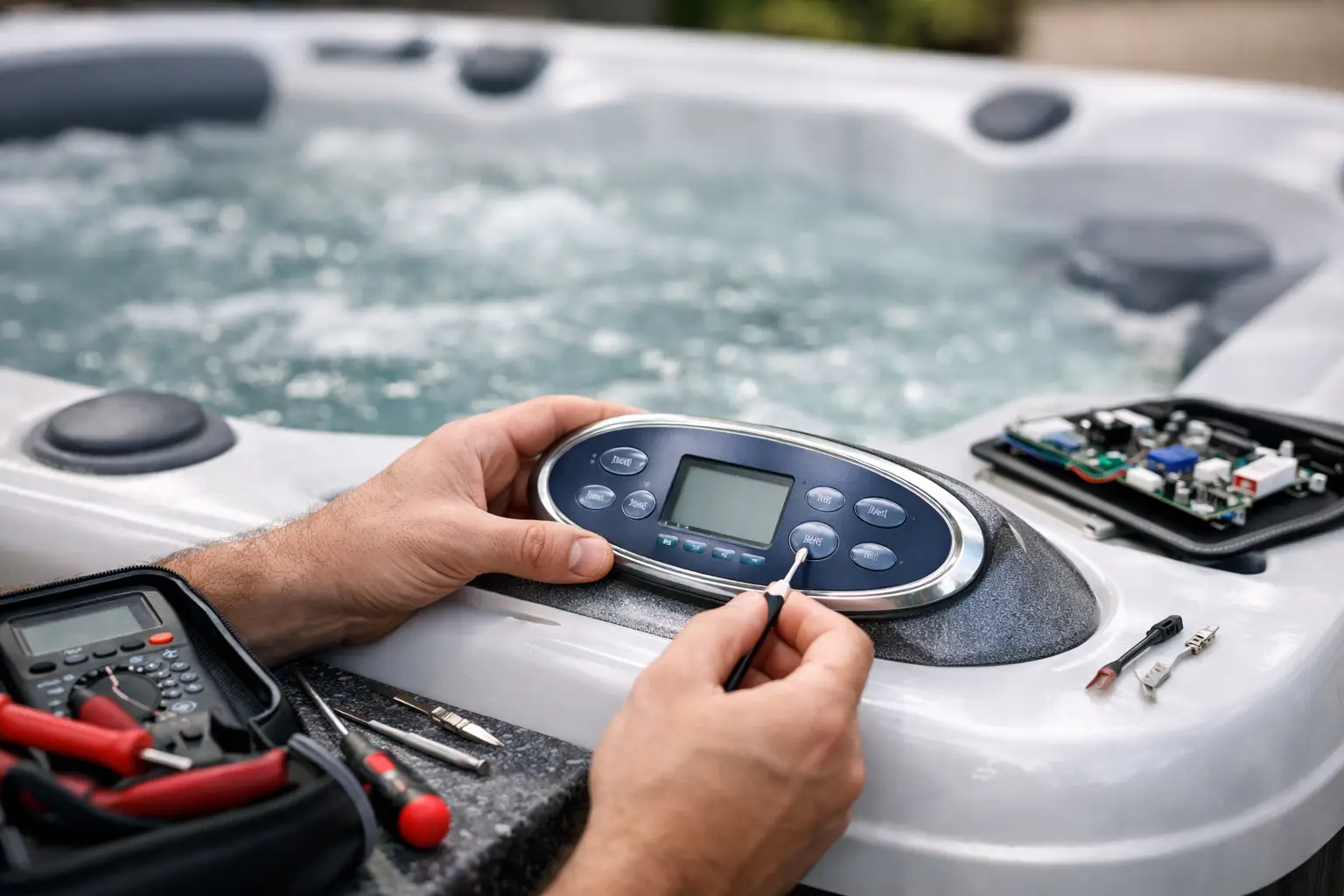
A hot tub that will not respond when you press Jets, Temp, or Light can seem like a simple button problem. In practice, hot tub control panel repair often begins with a larger question: is the panel itself failing, or is it correctly reporting a problem elsewhere in the spa? A blank display, flashing message or unresponsive keypad can all originate in the topside control, the wiring between components, the control board, or the spa’s electrical supply.
For homeowners in Northern and Central New Jersey, a proper diagnosis matters. A control issue can leave the circulation pump off, prevent the heater from operating, or allow a small electrical or moisture problem to become a more involved repair. The goal is never to replace parts based on a symptom, it is to identify the failed component and restore safe, reliable operation.
What the Control Panel Actually Does
The control panel, also called a topside or keypad, is the user interface for the hot tub. It sends commands to the computer control pack, which is the brain of the spa containing a circuit board, relays, heater, and connections for pumps, blowers, lights, and accessories.
When you press a button, the panel doesn’t powering that equipment directly. It communicates the request to the control board. The board then confirms required conditions, such as adequate water flow and safe temperature readings, before energizing the equipment.
That distinction is useful because a panel that appears to be malfunctioning may be responding to a flow fault, a tripped high-limit condition, a failed temperature sensor, or another problem inside the control pack. Replacing the visible keypad without checking the system can waste time and money.
Common Signs You Need Hot Tub Control Panel Repair
A completely blank display is a warning sign, but it is not the only one. Some panels still light up yet do not accept commands. Others display an error code, show an incorrect water temperature, or work intermittently.
A panel may need attention when buttons feel soft or stuck, the display is faded or missing segments, or the spa turns equipment on and off without a command. Moisture intrusion is common on outdoor spas; water can enter the topside through a cracked panel housing, failed gasket, or compromised cable connection.
Intermittent operation deserves the same attention as a total failure. If the panel works only after the spa has been powered off and back on, if it responds differently depending on the weather, or if one function repeatedly stops working, there may be corrosion, a failing cable, or an early control-board issue.
Error Codes Are Clues, Not Final Diagnoses
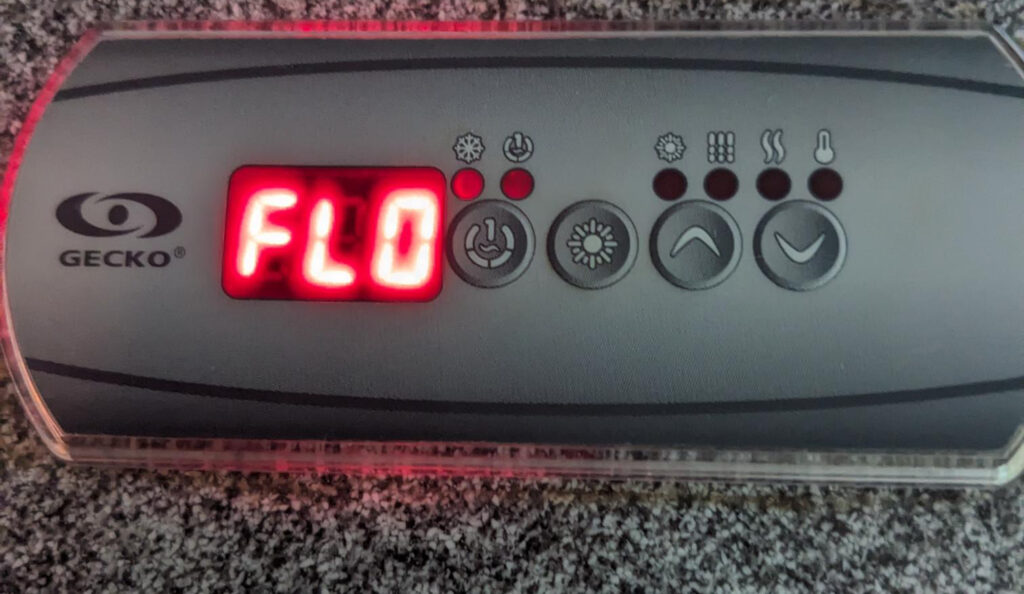
A FLO error on a topside may indicate a filter issue, not a control panel problem
Messages such as FLO, DR, OH, HL, SN, or similar codes vary by manufacturer and control systems. They are useful starting points, but they do not identify a single bad part. For example, a flow-related message may involve a dirty filter, low water level, air lock, a circulation pump problem, or a bad flow switch.
Likewise, an overheat message may result from restricted flow rather than a failed panel. Repeatedly clearing an error code without correcting its cause just allows the issue to return at the worst possible time.
Safe Checks a Homeowner Can Make First
There are a few basic checks worth making before scheduling service. These do not involve opening electrical equipment or bypassing safety devices.
First, verify that the spa has power. Check the GFCI breaker and the disconnect serving the hot tub. If the GFCI has tripped, reset it once. If it trips again, leave it off and arrange for service. A recurring GFCI trip can indicate an electrical fault that should not be ignored.
Next, confirm that the water level is above the skimmer and that the filters are not clogged. Restricted water flow can create error messages that can be misinterpreted as an electronic problem. If the spa has recently been drained and refilled, an air lock in the plumbing may also affect circulation.
If the panel display is active, write down the exact message and note what the spa is doing. Is the hot tub filtering? Is the heater indicator on? Did the problem start after a storm, power outage, or a water-care change?
Do not remove the control-pack cover, probe live terminals, or try to jumper sensors and switches. Portable spas combine water, high-voltage electrical components, and heat. New Jersey law requires qualified repair work, and a licensed and insured spa technician can test the system safely.
How a Professional Diagnosis Works
A proper service call evaluates the panel as part of the complete operating system. The technician begins with the reported symptom, checks power entering the spa, and inspects the topside control for physical damage or moisture. The panel cable and its connection at the control board are also checked for corrosion, loose pins, or rodent damage.
The next step is to determine whether the control board is receiving panel commands and responding correctly. Depending on the model, this may involve checking low-voltage communication, sensor input, relay operation, and voltage to the pumps and heater.
Technicians also verify the conditions that allow heating and circulation. A spa may display the desired temperature but fail to heat because it cannot establish flow or because a sensor is reading incorrectly. The display alone cannot tell the full story.
Repair, Replacement, or Control-System Upgrade?
The best solution depends on the spa model, the panel design, and parts availability. In some cases, the repair is straightforward: replacing the topside control panel, replacing a damaged cable, cleaning a corroded connection, or correcting a power-supply issue.
If the control board has failed, the repair can be more involved. The age of the spa matters, but age alone does not decide the repair. A well-maintained spa with working pumps, plumbing, shell, and heater assembly may justify a control-system repair. A spa with multiple major equipment failures may call for a broader discussion of cost and expected service life.
Brand-specific parts matter as well. Using the correct compatible panel and control components helps preserve functions such as programmed filtration, auxiliary controls, lighting, and diagnostic messages. Jersey Hot Tub Repair works with authorized warranty relationships for Thermospas, Dreammaker Spas, PDC Spas, Aquaterra, and Strong Spas, which can be particularly helpful when determining the appropriate repair path and warranty coverage.
Preventing Repeat Panel Problems
A control panel is exposed to sun, temperature swings, water splashing, and chemical residue. Keeping the cover in good condition reduces direct exposure, but it does not eliminate normal wear. Avoid spraying cleaners directly onto the keypad. Use a soft, damp cloth instead, and address cracked overlays or loose panel edges before water reaches the electronics.
If your panel is blank, flashing errors, or no longer controlling the spa as it should, keep the system powered down if the GFCI will not hold or if you see water near electrical components. Otherwise, record the message, maintain the proper water level, and have the complete spa system evaluated. A clear diagnosis is the fastest route back to a hot tub that heats, circulates, and responds when you need it.