
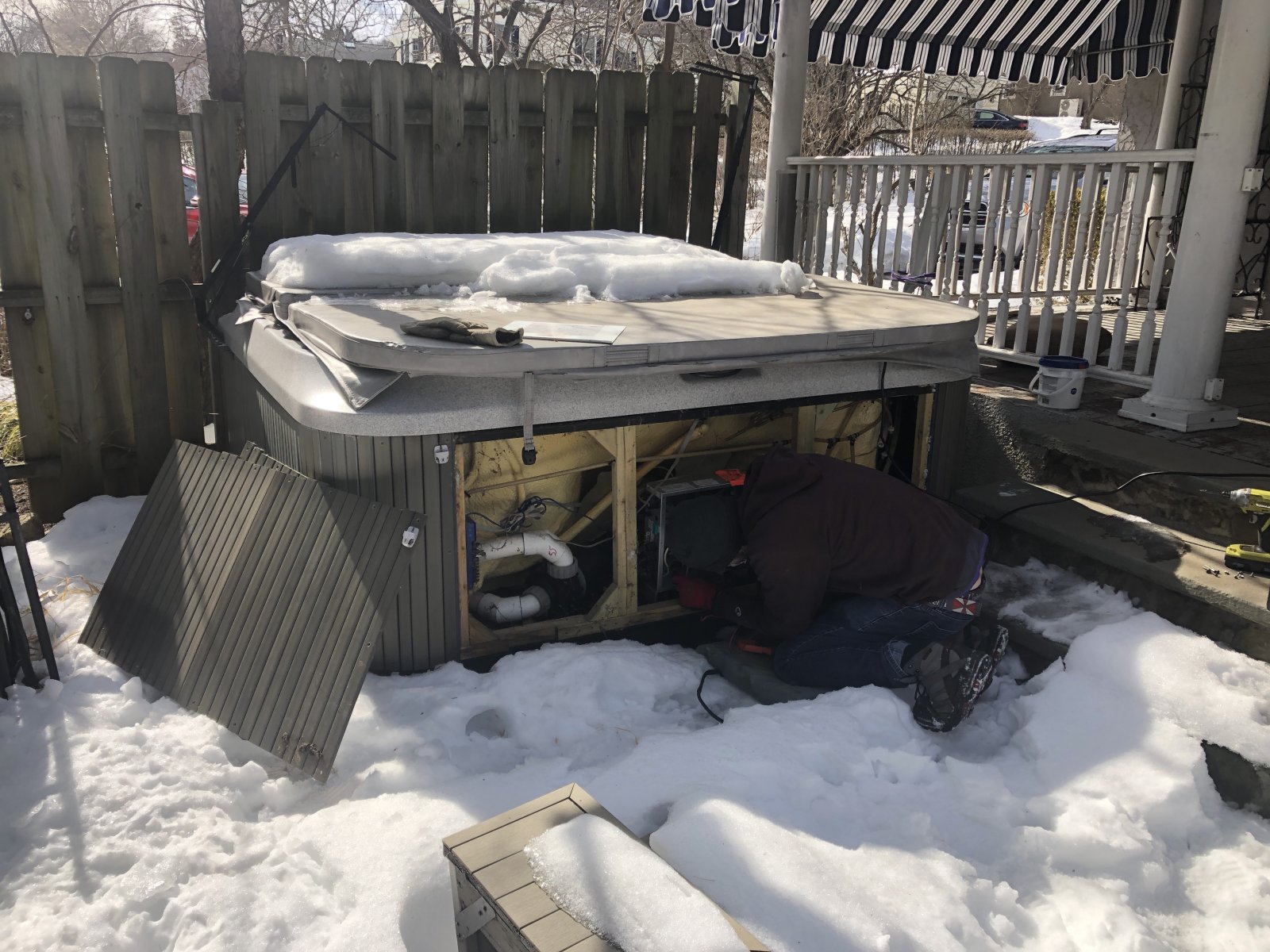
While a hot tub can freeze up in a New Jersey winter, it almost always takes a failure to get there: a power outage, a tripped breaker, or a pump that stops circulating during a hard cold snap.
Many homeowners buy a hot tub precisely for the cold months. Soaking in 102°F water while snow falls is half the appeal. However, the same spa that feels like a luxury in January can become an expensive repair in March if the water inside it turns to ice.
Why New Jersey winters put spas at risk
New Jersey winters are moderate on paper but erratic in practice. Typical January highs sit in the high 30s to low 40s Fahrenheit, with overnight lows in the 20s. In the northwestern part of the state, around Sussex and Warren counties, lows regularly drop into the teens, and a strong Arctic outbreak can push readings near zero for a night or two.
That swing is the problem. A tub during a 30°F night copes fine, but a sudden plunge to 5°F stresses every component at once. Owners also tend to relax during mild stretches, then get caught when the temperature falls fast, often at night or over a weekend when nobody is checking the equipment.
Storms add another hazard. Nor’easters and ice storms can knock out power around the state, sometimes for days. Without electricity, the heater and circulation pump stops, and a full tub loses its heat to the air. The cold, not the snow, is what threatens the spa, so the danger is highest during exactly the weather when the power grid is also under strain.
How a hot tub actually freezes
The tub’s large body of water is rarely the first thing to go. Water holds heat well, and a full 400-gallon spa can take many hours, even days, to cool from 100°F to freezing in an unheated space.
The plumbing is the weak point. Pipes, jets, fittings and pump housings hold small volumes of water. Water in a narrow pipe reaches 32°F long before the main tub does. Frozen water expands by roughly 9 percent, and that force cracks pipes, splits fittings and can damage pumps and heaters.
A frozen heater element can burn out when power returns, and a cracked manifold leaks the moment the ice melts. The cost of these repairs can run from a few hundred dollars for a fitting to well over a thousand for a pump or heater.
Cover and insulation matter too. A thin or waterlogged cover lets heat escape, and a cabinet with gaps lets cold air reach the plumbing. A well-insulated tub with a tight, dry cover buys valuable extra hours when something goes wrong.
Power outages: the biggest threat
A hot tub’s freeze protection depends on electricity: a sensor detects falling temperatures and switches the pump and heater on to keep water moving and warm. When the power is out, that safety net disappears.
A short outage of a few hours is usually harmless in a full, well-covered tub. The risk grows as an outage stretches beyond a day, especially when overnight temperatures sit in the teens or lower. At that point the plumbing is the likely casualty, and the owner often does not find out until power returns.
A few steps can reduce your exposure. Keep the cover on and latched, since that is the single best insulator. Resist the urge to open it to check on the water, which loses stored heat.
A generator or battery backup can keep a circulation pump running, but it must be sized and wired safely. Never run a generator in a garage or near windows, and use a licensed electrician for any permanent connection.
Run it all winter or winterize it
Owners in New Jersey face a real choice: keep the spa running through the cold months, or drain and winterize it. Neither is wrong, but each suits a different household.
Running it year-round makes sense if you use the tub regularly and have reliable power. Heating costs rise in winter, and an efficient, well-insulated spa with a good cover keeps that manageable. You also need to check the water level and equipment regularly.
Winterizing suits seasonal users, owners of older or poorly insulated tubs, and anyone who will be away for long stretches. The process involves draining the water, clearing the lines with a shop vacuum or blower, removing filters, and keeping the cover on to block rain and snow. Done properly, a drained tub cannot freeze and crack because there is no water left to expand.
A middle path works for many people. Keep the tub running, but make a plan for a severe cold snap or extended outage: know where the drain valve is, have a vacuum ready, and decide in advance when you will pull the plug. Deciding calmly beats improvising at midnight.
A pre-freeze checklist
A little preparation in November helps prevent winter damage. Work through these steps before the first hard freeze.
- Inspect the cover for tears, water-logging or a poor seal, and replace it if it is worn.
- Confirm the water level covers the skimmer so the pump never runs dry.
- Test the GFCI breaker and make sure the heater and pump come on when they should.
- Set the tub to a normal temperature, rather than turning it off or down low.
- Clear snow and ice from the cover and from around the unit, using a soft broom.
- Learn where the drain valve is and keep a wet/dry vacuum within reach.
- Have a backup plan in case of equipment failure. Check out this article to learn how to heat a broken tub hot tub while you await help.
- Save your dealer’s emergency number and your electrician’s contact.
During a cold snap, watch for warning signs: error codes on the display, a pump that sounds strained, jets with weak flow, or a spa that struggles to hold temperature. If the display shows a freeze or flow error, do not ignore it. Call a technician rather than repeatedly resetting the system, which can stress a pump that is already in trouble.
The bottom line
A hot tub doesn’t freeze just because a New Jersey winter is cold. It freezes when circulation stops and the cold wins, usually during a power outage or equipment failure. The plumbing goes first, long before the water in the tub itself turns to ice.
That means prevention is mostly about reducing the odds and shortening the window of risk. A solid cover, good insulation, working freeze protection and a clear plan for outages cover most of the exposure. Knowing when to drain the tub is just as important as knowing how to keep it running.
For owners who prepare, a New Jersey winter is the best time to enjoy a spa. For those who do not, one bad night can be expensive. Spend an afternoon this fall on the checklist above, and the next Arctic blast becomes something to watch from the water, not worry about from the window.
For specific guidance on your model, consult the manufacturer’s manual and a qualified spa technician, since freeze protection and winterizing steps vary between brands.
For more information or to schedule a service call to resolve your hot tub problems, contact us at 201-897-7900. You can also reach us by email through this link.
