A spa that sounds like it is running but has little or no water moving through the jets often has one simple problem: trapped air in the plumbing. Spa airlock removal can restore circulation quickly, but the right approach depends on where the air is trapped and whether another issue caused the flow problem in the first place. A pump that runs dry, overheats, or repeatedly loses prime needs more than a quick reset.
For Northern and Central New Jersey homeowners, this is usually noticed after refilling a hot tub, draining it for cleaning, replacing a filter, or dealing with a low-water event. The key is to address the airlock safely before the circulation pump or jet pump is damaged.
What Is a Spa Airlock?
An airlock is a pocket of air trapped in a spa plumbing line or pump. Water pumps are designed to move water, not compress air. When enough air collects in the pump, the pump may spin without moving water. You can hear the motor humming or running normally, but you see no flow from the jets and no movement at the circulation return.
Airlocks are most common after a refill because water gets trapped in the plumbing as the shell fills. They can also occur when the water level falls below a skimmer or filter intake, allowing air to be sucked into the system. On some spas, a dirty filter or failing pump can produce symptoms that look similar to an airlock.
Signs Your Hot Tub Has Trapped Air
The most familiar sign is a pump that turns on but does not produce jet action. With a dedicated circulation pump, the spa may display a flow, heater, or dry-fire error. You may also hear a gurgling sound from the equipment compartment or see intermittent spurts of water and air from the jets.
An airlock can follows a drain and refill. If the spa was operating normally before it was emptied and immediately loses flow when you fill it, trapped air is a reasonable suspect. If the issue develops gradually, comes and goes, or is accompanied by a leak or unusual grinding noise, a failing component is more likely.
Do not assume every no-flow condition is an airlock. A blocked filter can restrict flow enough to trigger a heater safety sensor. A broken impeller can leave the motor running with almost no circulation. A partially closed slice valve can do the same thing. Those problems need a different repair.
Safe Spa Airlock Removal Steps
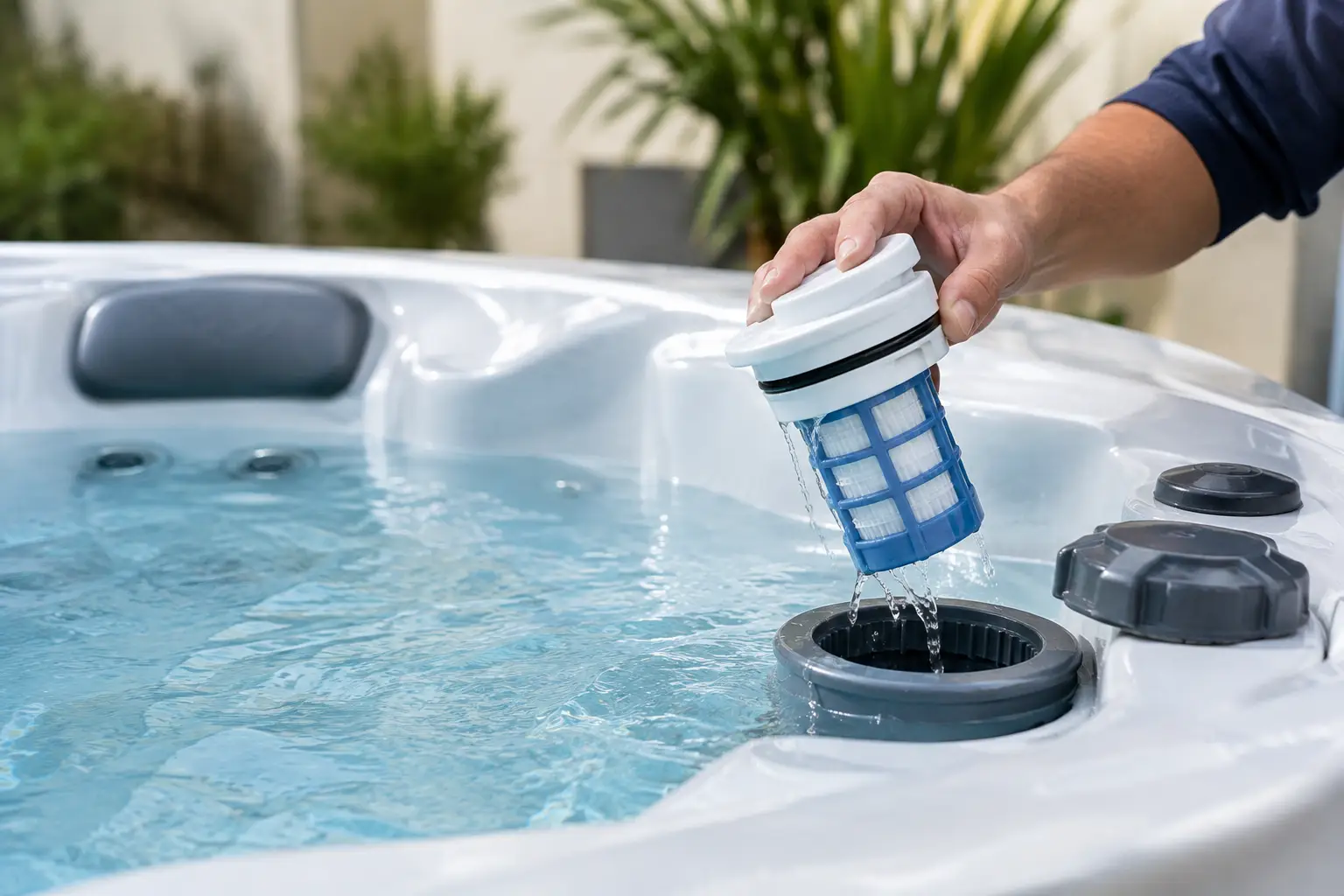
Start with the simple checks. Confirm that the water level is above the filter intake and skimmer opening. Remove the filters temporarily and inspect them for debris or collapsed fabric. A short test without filters can help identify a restriction, but do not operate the spa that way as a permanent solution.
When the tub is being drained and then refilled, the most effective method to avoid an airlock is to fill the spa through the filter compartment. Place your hose hose down the filter standpipe or intake opening rather than simply filling the shell. This sends water directly into the plumbing and helps force air out before the pumps start.
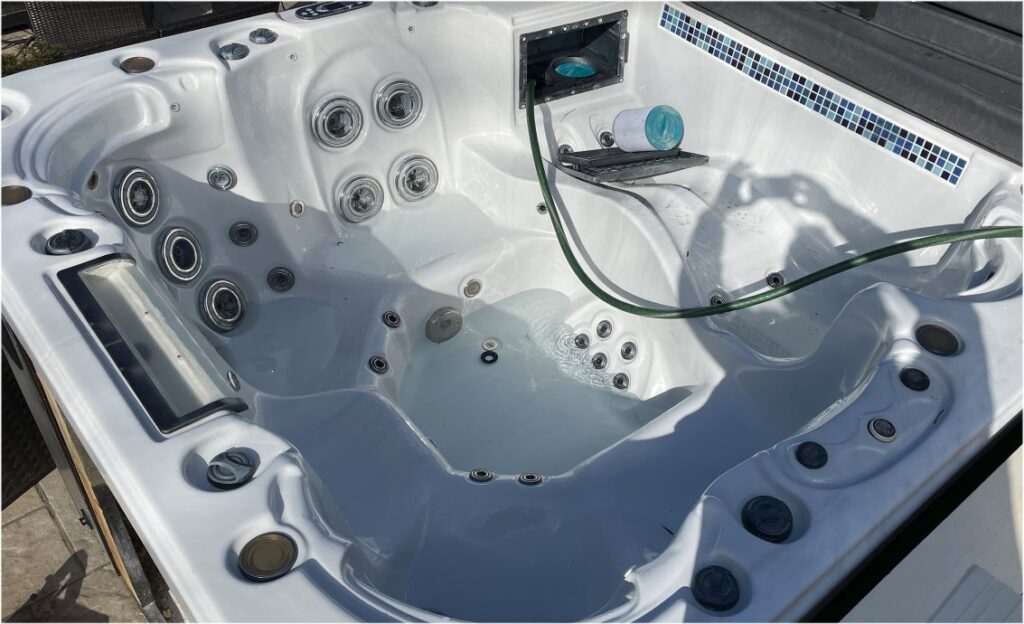
Always fill a hot tub with the hose in the filter compartment to push air out of the plumbing.
If the spa is already full and an airlock suddenly occurs, perform the basic checks first. Then, run one pump at a time and observe the jets. Repeatedly turn the pumps on and off in an attempt to break up that bubble of air. Some spas will clear a small air pocket after several short operating cycles. Avoid leaving a pump running for extended periods if no water flow appears.
On many hot tubs, a technician can carefully bleed trapped air at the pump union. This involves releasing pressure at the correct fitting just enough for air to escape, then resealing it before water loss becomes excessive. It sounds straightforward, but it is not a good first-time homeowner repair. A loosened union can leak, a worn O-ring may fail to reseat, and the wrong fitting can release water from a difficult-to-access line. All electrical components must also remain completely dry.
Why the Heater May Stop Working During an Airlock
Most modern spas use flow sensors to prevent heater damage. If the circulation system does not confirm adequate water movement, the heater will shut itself down. That is a useful safety feature, but not necessarily a failed heater.
Homeowners sometimes see a low-flow message, no-heat condition, or heater-related code and assume the heater needs replacement. Replacing a heater before confirming the source of the flow problem can lead to an unnecessary repair bill.
After a recent refill, the first concern should be circulation: water level, filter condition, pump operation and trapped air. If flow is restored, many spas resume heating normally after a reset or a short operating period.
If heat does not return after proper water flow is established, a technician may be needed to test the circulation pump, pressure or flow switch, temperature sensors, heater element, control board, and related wiring.
When an Airlock Is Not the Real Problem
A spa that repeatedly gets air in the lines deserves closer attention. Air has to enter somewhere. Low water level is the easiest explanation, but a plumbing leak, deteriorated pump seal, loose union, cracked fitting, or failing valve can also introduce air into the system.
Pump noise is another clue. A brief gurgle after refilling is common. Persistent rattling, grinding, or high-pitched whining are not airlock symptoms to ignore. Those conditions can point to motor bearing wear, an obstructed or damaged impeller, electrical failure, or water intrusion.
When to Schedule Professional Spa Airlock Removal
Call for service if basic refill and filter checks do not restore flow, if the spa shows recurring flow or heater errors, or if you see a leak around the equipment. Professional diagnosis is especially worthwhile when the pump runs but doesn’t move water, when the breaker trips, or when the spa has been losing water.
Jersey Hot Tub Repair can determine whether the issue is trapped air, a circulation restriction, a failing pump, a valve problem, or a leak at a gasket, union, or plumbing connection. For homeowners, the practical goal is not just getting the jets moving for the moment. It is restoring dependable water flow without risking the pump, heater, or electrical system that keeps the spa ready to use.
For more information or to schedule a service call to resolve your hot tub problems, contact us at 201-897-7900. You can also reach us by email through this link.