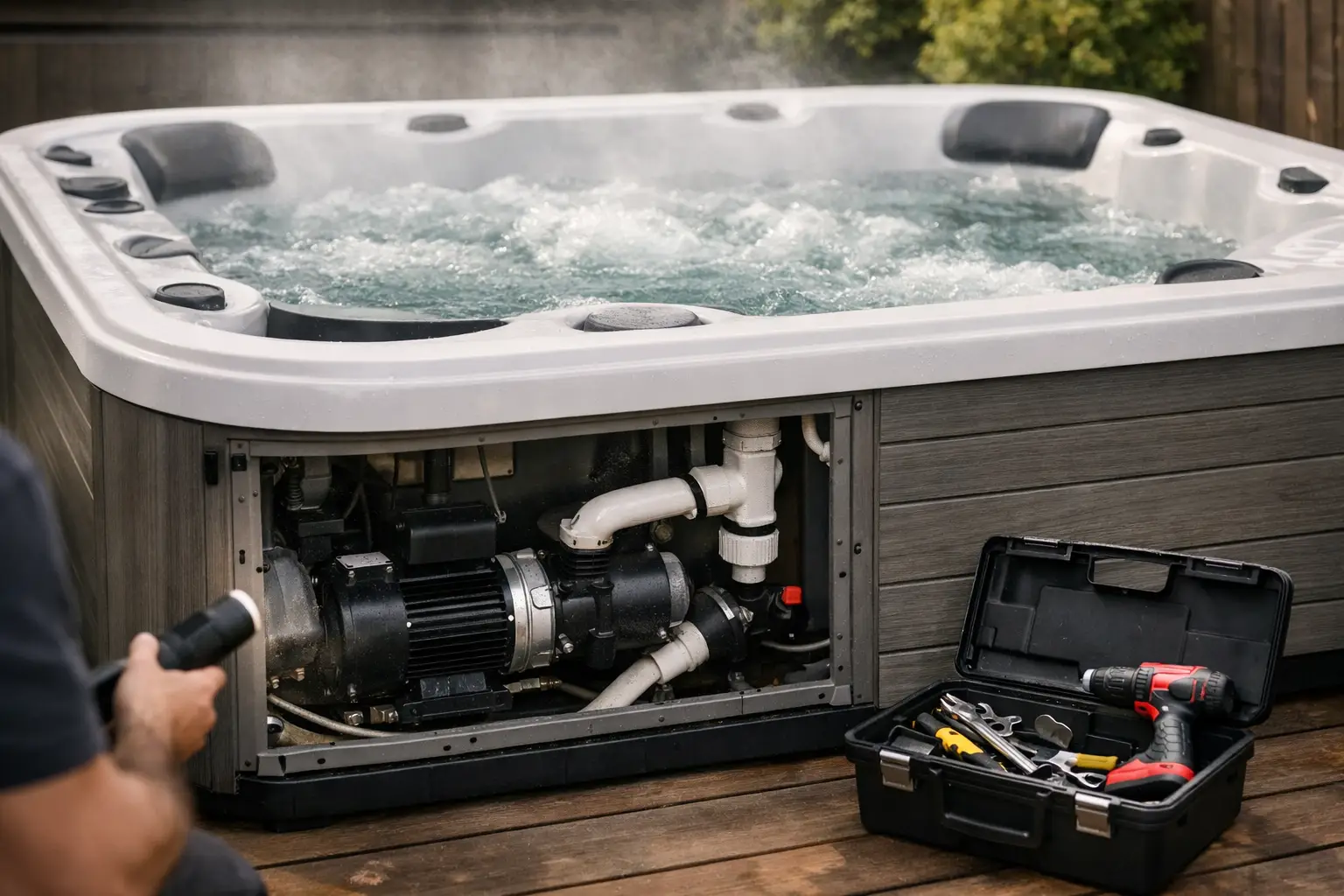
A hot tub making grinding noise is not a sound to ignore. Harsh grinding, growling, or metal-on-metal sounds often mean a pump is struggling, water flow is restricted, or a motor component is wearing out.
The most useful first step is to notice when the noise happens. Does it start as soon as you turn on the jets? Does it continue when the spa is only filtering? Does it appear with one pump speed but not another? Those details help identify which piece of equipment needs attention.
Why Is My Hot Tub Making a Grinding Noise?
In most residential spas, grinding noise comes from the equipment bay rather than the shell or plumbing. Jet pumps, circulation pumps, air blowers, and their motors all contain moving parts. They rely on proper water flow, sound bearings, and an unobstructed impeller to operate quietly.
A grinding sound can also be deceptive. Vibration from a loose pump mount or cabinet panel may make a mechanical problem sound worse than it is. On the other hand, what starts as a mild rumble can quickly become a serious issue if a pump loses prime or its bearings begin to fail.
A blocked or damaged pump impeller
The impeller is the rotating component inside a pump that moves water through the spa. Debris that gets past the filter can lodge around it. Pieces of deteriorated filters, leaves, hair, or small plastic fragments can interfere with rotation and create a rough grinding or rattling sound.
A damaged impeller may still move some water at first. You may notice weaker jets, a flow error on the control panel, or a pump that sounds louder each day. The pump should be inspected before the obstruction damages it.
Worn motor bearings
Pump motors use bearings that allow the shaft to spin smoothly. As bearings wear, they often produce a deep growl, grinding noise, or high-pitched whine. The sound may increase while the jets are running and may not change much after cleaning filters or adjusting water level.
Bearing wear is generally a mechanical repair issue. Depending on the pump model, age, condition of the wet end, and availability of parts, a technician may recommend rebuilding the motor or replacing the complete pump assembly.
Low water, dirty filters, or restricted flow
A pump can sound rough when it’s not getting enough water. This is called cavitation. Instead of moving a solid stream of water, the pump pulls air pockets through the system. It may make a gravel-like sound, surge at the jets, or produce air bubbles that are not coming from the air controls.
Start with the simple checks: make sure the water level is above the filter, but also visually inspect the filter. A dirty filter can restrict flow enough to make a circulation pump work harder than it should.
Remove the filters temporarily for a brief diagnostic check. If the noise or weak flow improves with the filters out, clean or replace them. Do not leave a spa operating without filters as a regular practice, since debris can then reach the pump and heater.
Air entering the circulation system
Air can enter the suction side of a pump through a loose union, worn gasket, failing o-ring, or small plumbing leak. Unlike a visible pressure-side leak, a suction-side air leak may not leave much water on the equipment pad. It can still cause a pump to lose prime, sputter, or grind as it pulls air through the system.
This type of problem needs a closer inspection of pump unions, valves, fittings, and seals. A technician can determine whether the noise is coming from an air leak, a circulation issue, or a damaged pump before replacing parts unnecessarily.
A failing blower or loose equipment mounting
Not every grinding sound is a water pump. If the noise only occurs when a dedicated air blower is switched on, the blower motor or its internal fan may be failing. A loose motor mount or vibrating plumbing line can also create a loud rattle that travels through the cabinet.
If the sound begins only when air bubbles are activated, tell the service technician that it is tied to the blower function. If it starts during standard filtration, the circulation pump becomes a suspect.
Safe Checks Before You Call for Spa Repair
Homeowners can often provide useful information without opening electrical equipment or disassembling a pump. First, look at the control panel for any flow, heater, or pump-related error message. Next, confirm the water level and inspect the condition of the filters.
Then listen from outside the cabinet while the spa runs. Identify whether the sound comes from the left or right side of the equipment area, and whether it happens during low speed, high speed, filtration, heating, or blower operation. Avoid placing hands near moving equipment, and do not remove pump fittings while the spa is full and pressurized. Do not touch wiring, terminals, or the control box. Water and spa electrical components require trained service work.
When to Shut the Hot Tub Down
Turn off the spa and cll for service if the grinding is loud, the pump is not moving water, or the control panel shows a flow or dry-fire condition. Running a pump without adequate water flow can damage a motor or heater.
Shut the power off immediately if you smell burning insulation, see smoke, have repeated breaker trips, or find water near electrical connections.
A quieter but persistent bearing noise still deserves attention. The spa may continue to operate for a short period, but there is no reliable schedule for when a bearing or seal will fail completely. It is usually less disruptive to schedule an inspection while the equipment is still accessible and the problem is limited to one component.
What a Technician Will Check
A professional diagnosis goes beyond confirming that the pump is noisy. The service visit should identify why the pump is under stress and whether related components have been affected. That may include checking filter condition, water flow, pump amperage, unions and o-rings, shaft seals, impeller condition, motor bearings, and control-system operation.
The technician may also check whether the spa is heating correctly and whether the circulation system is moving enough water through the heater. A pump problem can create secondary symptoms, including a heater that cycles off, weak jets, poor filtration, or recurring error codes.
For homeowners in Northern and Central New Jersey, Jersey Hot Tub Repair provides on-site diagnosis and repairs for pumps, motors, circulation systems, heaters, blowers, controls, and leak-related components. The goal is to repair the actual cause of the noise, not simply replace the loudest part in the equipment bay.
Preventing the Next Pump Noise
Most pump wear cannot be prevented, but good operating habits reduce unnecessary strain. Keep the water level where the manufacturer recommends it, maintain clean filters, and address small leaks before they affect circulation. If a pump becomes noticeably louder, call for service before the spa stops heating or flowing.
Semi-annual preventive maintenance is useful for finding worn seals, deteriorating o-rings, restricted filters, and early circulation issues before they become an urgent repair. A quiet spa is not just more pleasant to use. It is usually a sign that water, pumps, and controls are working together the way they should.
A grinding sound rarely fixes itself. A clear description of when it starts, what the jets are doing, and whether any error code appears will help move the repair from guesswork to the right solution.
For more information or to schedule a service call to resolve your hot tub problems, contact us at 201-897-7900. You can also reach us by email through this link.