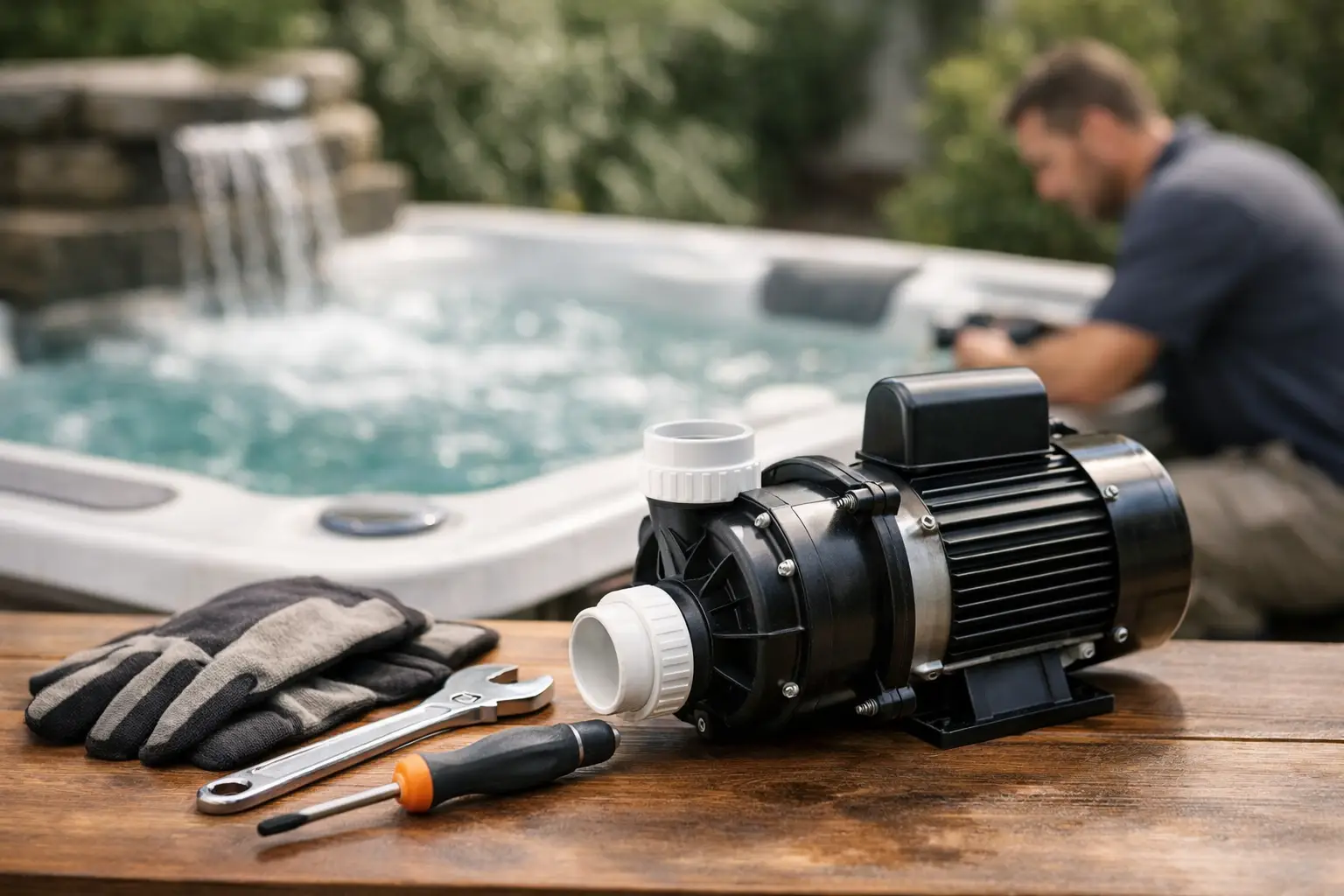
A hot tub can look perfectly normal from the outside while a failing pump is quietly putting the whole system at risk. Weak jets, no heat, a humming equipment bay, or a breaker that trips are all situations where spa pump replacement may be part of the solution. But a pump should not be replaced simply because the water is not moving. The right repair starts with determining whether the pump itself has failed or whether another part of the circulation system is causing the problem.
For New Jersey spa owners, timing matters. A circulation issue in mild weather can be inconvenient. The same issue in January can allow water to cool quickly, create freeze concerns, and turn a manageable repair into a larger plumbing or equipment problem.
What a Spa Pump Does for Your Hot Tub
Most portable spas use one or more pumps. A jet pump moves water through the jets for hydrotherapy and may operate at one or two speeds. A circulation pump, when equipped, runs at a lower flow rate for long periods to move water through the filter, heater, and sanitation system.
That water movement does more than power the jets. It allows the heater to operate safely, carries sanitizer through the vessel, filters debris, and helps the control system maintain the programmed water temperature. When flow falls below the required level, many spas display a flow-related error, shut down the heater, or cycle equipment in an attempt to protect itself.
A pump failure can therefore show up as a heating problem, poor water quality, weak jet pressure, or an electrical issue. Looking only at the symptom can lead to the wrong repair.
Signs That Point to a Failing Pump
Some pump problems develop slowly. Others announce themselves with noise, leaks, or a sudden loss of circulation. A pump that has reached the end of its service life may make a high-pitched whine from worn bearings, a grinding sound during operation, or a loud hum without starting.
Water around the pump is another warning sign. A leak at a union may only need a new O-ring or a tightened connection. Water leaking from between the motor and the wet end, however, often points to a failed shaft seal. If that leak has been present long enough, moisture can damage the motor bearings or electrical components.
Call for service if you notice any of the following conditions:
- The pump hums but does not start, or starts only after several attempts.
- Jet pressure has dropped even after cleaning the filter and confirming water level.
- The spa heater will not stay on because of a low-flow or circulation error.
- The motor is unusually loud, hot to the touch, or has a burnt electrical smell.
- The breaker trips when the pump is called on to run.
- Water is leaking from the pump body, shaft seal area, or plumbing connections.
Why a Pump Is Not Always the Problem
A no-flow condition does not automatically mean the spa needs a new pump. A clogged filter can restrict water flow enough to trigger a heater or circulation fault. Low water level can pull air into the suction side of the system. Closed slice valves, a blockage in plumbing, an air lock after draining and refilling, or a stuck check valve can also prevent normal circulation.
Choosing the Correct Replacement Pump
Spa pumps are not one-size-fits-all equipment. The replacement has to match the spa’s plumbing, electrical supply, control system, and intended flow requirements. Installing a pump based only on horsepower can create new problems, including poor jet performance, overheating, or control-board damage.
The technician will verify details such as voltage, amperage, horsepower, speed configuration, frame size, plumbing connection size, suction and discharge orientation, and the type of wet end. A two-speed jet pump must communicate properly with the spa pack. A circulation pump must provide the flow range the heater and filtration system expect.
Physical fit matters too. Equipment bays are often tight, particularly on older spas. The pump needs to align with existing unions and plumbing without forcing pipes out of position. Replacement may also involve new gaskets, unions, tailpieces, wiring terminals, or a revised fitting arrangement when an original pump model is no longer available.
What Professional Spa Pump Replacement Involves
A proper pump replacement is more than disconnecting two unions and moving wires. The spa is powered down safely, water is managed to prevent unnecessary loss, and the failed component is tested when possible. The technician checks for the reason the pump failed, not just the failure itself.
Protecting a New Pump From Early Failure
A replacement pump lasts longer when the rest of the spa is maintained. Keep the water level above the filter intake, rinse filters regularly, and clean them on the schedule appropriate for your use and water conditions. A heavily loaded filter makes the pump work harder and can reduce heater flow.
Water chemistry also matters. Poorly balanced water can damage seals, fittings, heaters, and internal pump components over time. If the spa is not being used for a season, it still needs an appropriate winterizing plan. Simply turning it off during a New Jersey winter can leave water in lines and equipment where it can freeze.
Semi-annual maintenance provides a practical opportunity to inspect pump connections, check for early leaks, evaluate water flow, and catch deteriorating O-rings or gaskets before they become a service interruption. For owners who use their spas year-round, that attention is usually less expensive than reacting to a midwinter failure.
When to Schedule Service
If your spa is losing heat, making new mechanical noise, leaking from the equipment bay, or tripping a breaker, schedule service before the condition worsens. Jersey Hot Tub Repair can diagnose the pump, motor, plumbing, heater, and controls as connected parts of one system rather than treating every symptom as a standalone problem.
Until service is performed, avoid running a dry or noisy pump. Keep the water at a safe level, remove and clean a visibly dirty filter if practical, and do not bypass safety messages or electrical protections. A quick, accurate diagnosis gives your spa the best chance of returning to reliable circulation, steady heat, and normal use before the next cold stretch arrives.
For more information or to schedule a service call to resolve your hot tub problems, contact us at 201-897-7900. You can also reach us by email through this link.