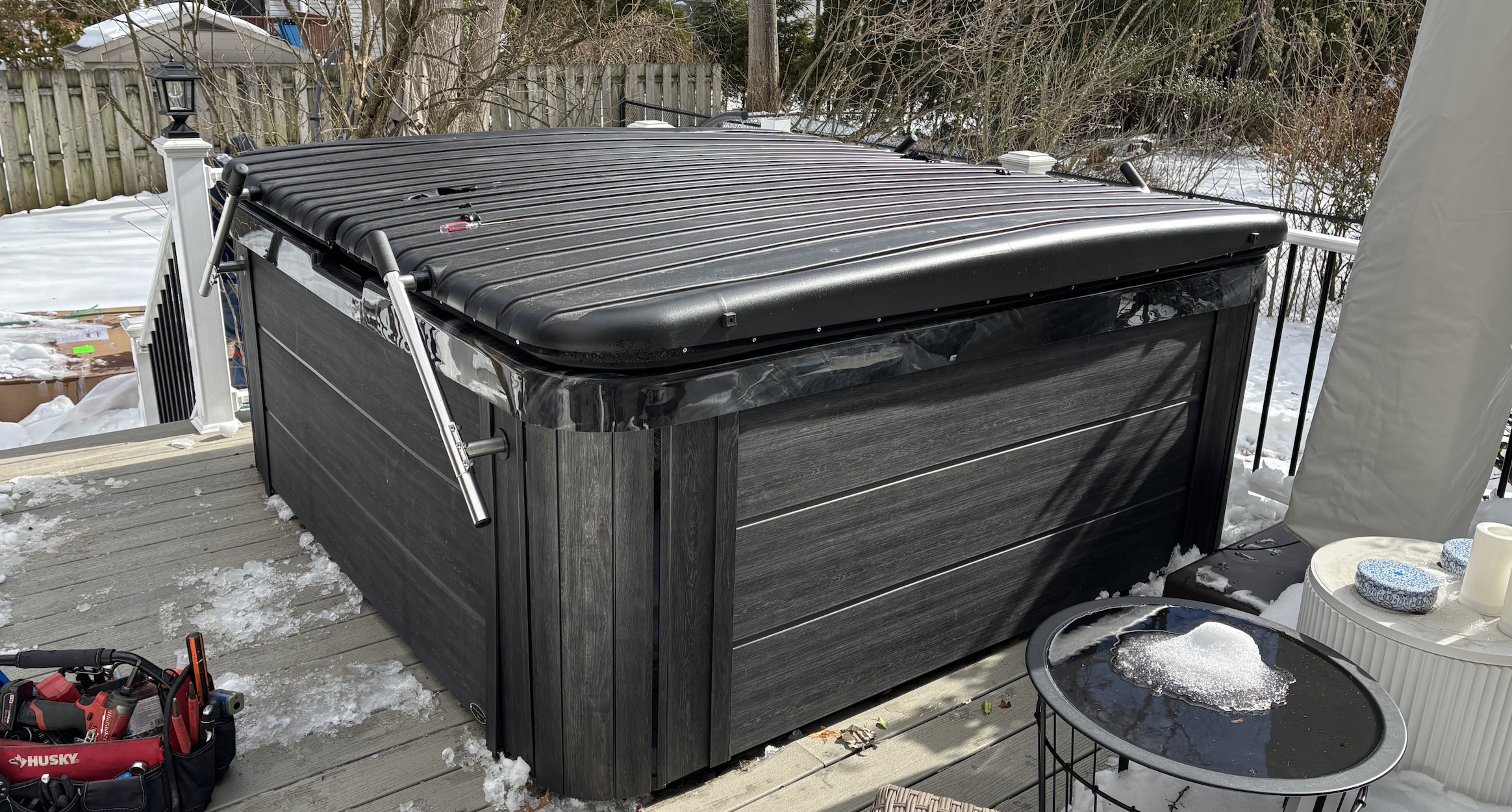
A hot tub that was warm yesterday but is lukewarm today can turn a planned evening outside into a maintenance problem fast. When a hot tub not heating issue appears, the heater is not always the failed part. Modern portable spas will often stop heating to protect themselves when water flow, sensors, electrical supply, or control settings are not right.
For homeowners in Northern and Central New Jersey, the timing matters. Cold air pulls heat from the shell and cover quickly, while a circulation problem can become more serious if it is left alone during freezing weather. A few basic checks can help identify whether the problem is simple or whether the spa needs a technician.
Winter is the worst time for a hot tub to stop heating
Start With the Settings and What the Spa Is Doing
Before opening an equipment bay, check the control panel. Confirm that the spa is in standard or ready heating mode, not an economy, sleep, vacation, or hold mode. Those modes are designed to reduce energy use by limiting when the heater runs. A spa in economy mode may only heat during scheduled filtration cycles, which can make it seem as though it has stopped working.
Set the temperature a few degrees above the current water temperature and give the spa time to respond. Most portable spas heat gradually, commonly around 4 to 5 degrees per hour depending on the heater size, outdoor temperature, insulation, cover condition, and whether the jets are running. If the water is at 65 degrees, it will not reach 102 degrees in one afternoon.
Check the topside display for an error message or flashing indicator. Messages related to flow, dry heating, high limit, sensor faults, or overheating provide useful clues. Write down the exact code before resetting the breaker or turning the spa off. Clearing the code may make the display look normal temporarily, but it rarely corrects the condition that triggered it.
A Hot Tub Not Heating Often Has a Flow Problem
Water must move through the heater at the correct rate. If flow is restricted, sensors may shut the spa down before the water inside the heater tube gets too hot. This is one of the most common reasons a hot tub appears to have a heater failure when the real issue is circulation.
Start by checking the water level. It should sit above the highest jets and well above the skimmer opening. Low water can allow air into the plumbing and reduce flow to the circulation pump.
Next, remove the filters and run the spa briefly. A clogged or collapsed filter can restrict water movement enough to prevent heating. If the spa begins operating normally with the filters out, clean them thoroughly or replace them if the fabric is worn, stiff, damaged, or still dirty after cleaning. Do not operate the spa for extended periods without filters installed.
Also listen to the equipment. A healthy circulation pump generally produces a steady, low sound and creates visible water movement. Humming without water movement or surging flow may point to an air lock, blocked plumbing, failing pump, worn impeller, or motor issue.
A dirty spa can contribute to this problem as well. Heavy debris, poor water balance, scale buildup, or neglected filters create work for the circulation system and can shorten the life of pumps and heaters. Regular water flushing, filter care, and maintenance reduce the chance that a restricted-flow problem becomes an equipment repair.
Check Power Before Assuming the Heater Has Failed
Most outdoor spas use a dedicated 240-volt GFCI-protected electrical circuit. A spa may still light up and run some functions after part of the electrical supply has tripped or failed, yet lack the full power required for the heater.
Check the spa disconnect and the home electrical panel for a tripped breaker. Reset a tripped GFCI once, following the equipment instructions. If it trips again, leave it off. Repeated tripping can be caused by moisture, a damaged heater element, a failing pump, wiring issues, or another electrical component drawing current improperly. Continuing to reset it can create a larger repair and is not a safe diagnostic method.
Do not remove electrical covers or test live components unless you are qualified to work on spa electrical systems. The equipment compartment combines water, high-voltage wiring, circuit boards, heaters, and motors in a confined area. A service technician can test voltage at the heater and control system, check current draw, and isolate whether the fault is in the supply, circuit board, heater element, or another component.
Heater and Sensor Failures Need Proper Diagnosis
If water flow is good and the spa has correct power, the heater assembly or its related controls may be the issue. Heater elements can fail from age, corrosion, dry-fire conditions, scale, or electrical damage. In some cases, an element may be partially failed and trip the GFCI only when the spa calls for heat.
Temperature sensors and high-limit sensors can also prevent heating. A sensor that reads incorrectly may tell the control system the water is already warm enough, or it may trigger a safety shutdown. Control boards can develop failed relays or damaged connections that prevent power from reaching an otherwise functional heater.
These parts can produce similar symptoms, which is why replacing a heater based on a guess is rarely the best first move. A complete diagnosis includes verifying water flow, checking incoming voltage, inspecting connections, testing heater resistance, and evaluating sensor readings against actual water temperature. On newer spas, the control system may store error history that helps narrow the cause.
Cold Weather Changes the Urgency
In New Jersey, a spa that is not heating during winter needs attention sooner rather than later. Even if the water has not frozen, a stopped circulation system can leave plumbing vulnerable as temperatures drop. Keep the cover closed to hold as much heat as possible, and avoid draining the spa unless a qualified technician recommends it. An empty or partially drained spa can still retain water in lines, pumps, and equipment, which freezes quicker than a full spa.
If the spa has lost power and temperatures are approaching freezing, protect the equipment area from wind and contact a spa service professional promptly.
A worn or waterlogged cover also affects heating performance. If the spa reaches temperature but cannot hold it, or the heater seems to run constantly in cold weather, inspect the cover for heavy weight, sagging foam, torn vapor barrier material, and gaps around the perimeter. A cover issue does not usually cause a no-heat condition by itself, but it can make a marginal heating system much more noticeable.
When It Is Time to Schedule Service
A professional repair visit is appropriate when the breaker trips repeatedly, the control panel displays a persistent error, the circulation pump is noisy or not moving water, or the water temperature continues to fall despite normal settings.
Jersey Hot Tub Repair diagnoses the full spa system rather than treating every no-heat call as a heater replacement. That includes circulation pumps, jet pumps, heaters, sensors, control panels, electrical components, plumbing connections, and the condition of filters and water. This approach is especially useful for older spas where several components may be contributing to the same symptom.
A hot tub should be a dependable part of your backyard, not a cold-water troubleshooting project. Catching a loss-of-heat problem early gives the system the best chance of a straightforward repair and helps keep your spa ready for the next cold New Jersey night.
For more information or to schedule a service call to resolve your hot tub problems, contact us at 201-897-7900. You can also reach us by email through this link.