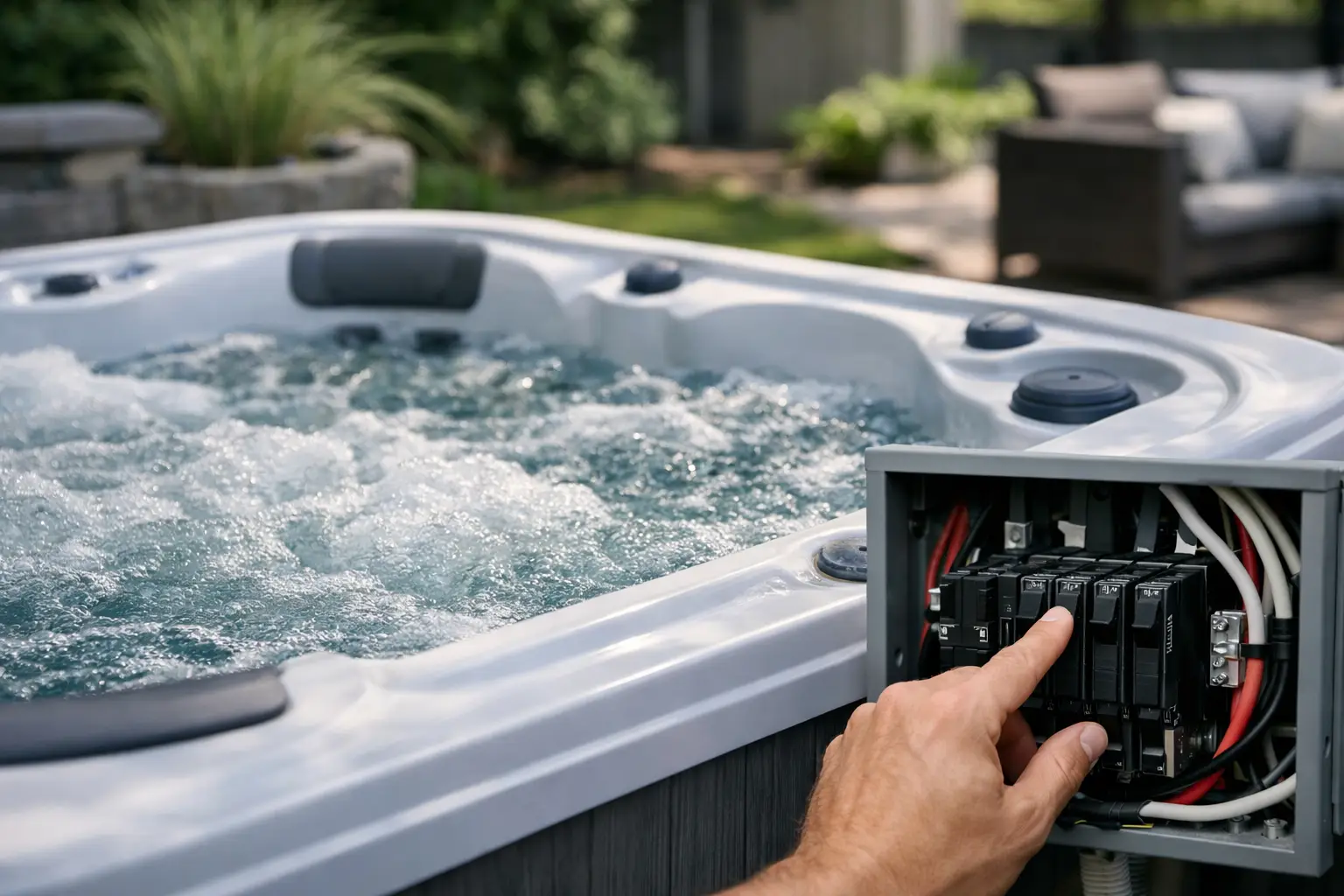
A hot tub that keeps tripping a circuit breaker is not just an inconvenience. It is the electrical system responding to a possible ground fault, overloaded circuit, failing component, or moisture problem. Resetting the breaker may get the spa running briefly, but repeated breaker trips are a signal to stop and find the cause before a minor repair turns into component damage or harm to a bather.
For homeowners in Northern and Central New Jersey, the timing of the trip is one of the most useful clues. Does the breaker trip immediately when you reset it? Only when the spa begins heating? When a pump switches to high speed? After a rainstorm? Those details help narrow a complicated spa system to the component most likely at fault.
Why a Hot Tub Trips the Breaker
Most outdoor portable spas operate from a dedicated 240-volt GFCI-protected circuit. A GFCI breaker is designed to trip when it senses electrical current taking an unintended path, including a path to ground. That protection is particularly important around water, and a breaker that trips should be treated as a safety device doing its job.
The goal is not simply to make the breaker stay on. The goal is to identify which part of the spa is creating the unsafe condition and repair it correctly.
A failed heater element is a common cause
The heater is one of the most frequent reasons a spa trips its GFCI breaker. Heater elements can deteriorate internally over time. Mineral buildup, poor water balance, age, and low-flow conditions can all shorten their life.
A damaged element may still heat the water for a while, so the symptom is not always an immediate no-heat condition. This is not a part to bypass or test casually with the power live. A technician can isolate and test the heater circuit properly, then determine whether the element, heater assembly, or a related connection is at fault.
Pumps and motors can develop electrical leakage
Your spa may have a circulation pump, one or more jet pumps, and sometimes a separate blower. Each motor operates in a wet equipment environment and can fail in ways that affect the GFCI. Water entering a motor, worn internal insulation, deteriorated seals, or an overheating winding can create a ground fault.
A useful pattern is a breaker that holds until you press the jets button, switch a pump to high speed, or activate a water feature. That does not prove the pump is bad, but it gives the service technician a specific circuit to investigate. A noisy pump, reduced jet pressure, humming without proper startup, or water beneath the equipment bay can add useful context.
Moisture inside the equipment area or control box
Outdoor spas are built for weather, but they are not immune to water intrusion. Heavy rain, over-filling, a plumbing leak, or condensation can introduce water where it does not belong.
If tripping started after a storm or after the spa sat unused, avoid assuming the breaker itself is defective. Turn off power at the disconnect or breaker and inspect only what you can see safely. Look for standing water, fresh drips, damp insulation, damaged conduit, or a loose equipment door. Do not open the control box, touch internal wires, or attempt to dry components with the spa energized.
Ozonators, blowers, and accessories can be overlooked
The main pumps and heater get the most attention, but smaller components can trip a breaker too. An ozonator, audio equipment, or lighting circuit may fail independently of the main spa functions. Because these components often run on programmed cycles, homeowners may notice that the breaker trips overnight or after the spa has been idle for hours.
What to Do When Your Hot Tub Keeps Tripping the Breaker
Start by leaving the spa off. One reset can help confirm whether the trip was a one-time event, but repeatedly forcing a GFCI breaker back on is not a repair strategy. If it trips again, leave it off until the issue is diagnosed.
There are a few safe observations that can make a service visit more efficient:
- Note exactly when the breaker trips: immediately, during heating, when jets start, during a filtration cycle, or after rain.
- Check whether the water level is high enough for normal circulation and whether the spa has any visible leaks around the cabinet or equipment bay.
- Look for error messages on the topside control panel before power is shut down, and take a photo if one appears.
- Identify recent changes, such as a power outage, electrical work, a new cover lifter, unusual water chemistry, a leak, or a pump that became louder than normal.
Do not replace a breaker with a non-GFCI model, install a larger breaker, or attempt to bypass the GFCI protection. Those actions can turn a protective shutdown into an electrical hazard. Likewise, a breaker that will not reset with the spa disconnected may indicate a problem at the breaker, disconnect, or supply wiring that should be evaluated by a licensed electrician.
Check the simple conditions without taking electrical risks
Water flow problems do not always directly trip a breaker, but they can contribute to heater stress and overheating. If the spa is powered down, you can check the water level and inspect the filter condition. A severely clogged filter can restrict circulation.
Also inspect the outside of the cabinet for active leaks. Water near the base does not automatically mean the electrical system has been exposed, but it is relevant diagnostic information. A leak at a union, pump connection, heater assembly, or gasket can gradually become both a plumbing and electrical concern.
How a Spa Technician Diagnoses the Fault
Professional diagnosis begins with the tripping pattern, a visual inspection, and confirmation that the dedicated circuit and GFCI protection are operating correctly. The technician then evaluates the spa’s major loads, often isolating the heater, pumps, blower, ozonator, and other components to determine where the fault appears. This process is more precise than replacing the most likely part, crossing your fingers and hoping the breaker holds.
Sometimes the answer is straightforward: a heater element has failed or a wet pump motor needs replacement. Other cases involve more than one issue, particularly on older spas with an active leak and aging electrical equipment. A clear diagnosis lets the homeowner decide whether a targeted repair, component replacement, or broader equipment update makes the most sense.
When to Schedule Service Right Away
Arrange professional service promptly if the breaker trips every time, the spa trips when heating begins, there is visible water in the equipment area, you smell burning plastic, or the control panel behaves erratically. Keep the power off if you see scorched wiring, melted components, smoke, or a wet control box.
Hot tub repair requires trained, properly qualified service professionals, which matters when troubleshooting GFCI-protected equipment around water. Jersey Hot Tub Repair provides on-site diagnostic service for the electrical, heating, circulation, and control issues that affect residential spas.
For more information or to schedule a service call to resolve your hot tub problems, contact us at 201-897-7900. You can also reach us by email through this link.