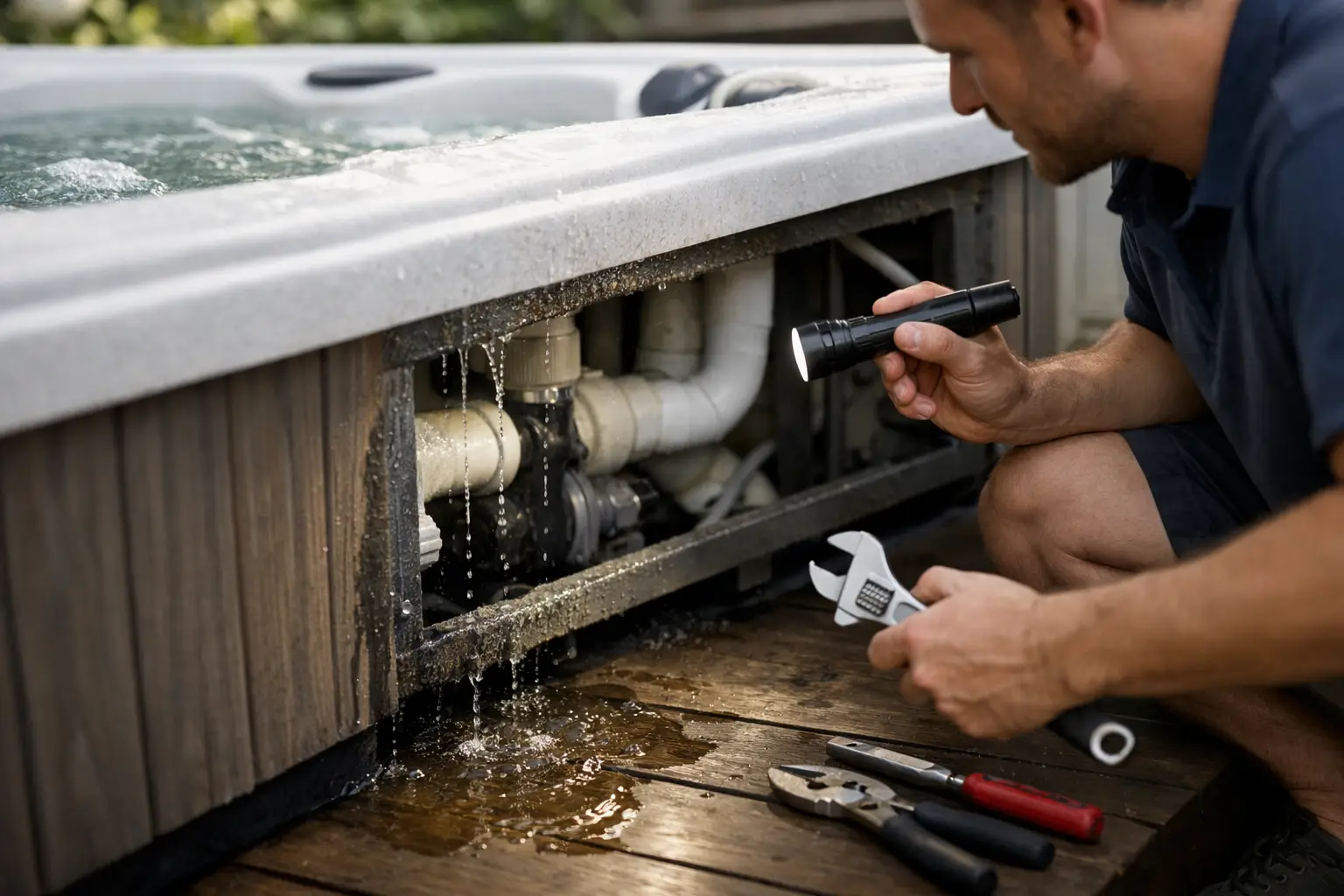
A hot tub can lose a little water from normal splash-out and evaporation, but a noticeable drop in water level means it is time to ask: why is my hot tub leaking? The answer is rarely a cracked shell. Many leaks begin in the equipment bay, at a pump union, heater fitting, worn gasket, or plumbing connection that only drips when a spa pump is running.
For homeowners in Northern and Central New Jersey, a leak deserves prompt attention. Water can damage the cabinet, soak insulation, strain equipment, and in the wrong location create a safety concern around electrical components.
Start by Confirming It Is Actually a Leak
Before assuming a plumbing failure, rule out ordinary water loss. An uncovered hot tub can lose water through evaporation, particularly when the water is warm and the air is dry, windy, or cold. Active use also carries water over the shell edge, especially with children or several bathers.
We always recommend putting a 3″ strip of electrical tape at the water line in your hot tub, then check it 24 hours later. Electrical tape leaves no residue when removed, and knowing if you are losing 1/4″ a day or 2″ a day is very useful to a repair technician.
Why Is My Hot Tub Leaking From the Bottom?
When water appears under the hot tub, the actual leak may be directly above that spot or several feet away. Water follows plumbing lines, insulation, framing, and the spa base before it finally reaches the ground. That is why the puddle alone rarely identifies the failed part.
A leak that occurs only when the pumps are on often points to a pressure-side issue. Common examples include a loose pump union, deteriorated O-ring, cracked fitting, failing pump seal, or a small split in plumbing. These parts may hold water when the spa is off but leak once the pump builds pressure.
If the water loss continues whether the spa is running or turned off, the source may be below the waterline in the shell plumbing, at a jet body, suction fitting, light fitting, or a plumbing connection. The level where the water finally stops dropping can also offer a clue. For example, water that stops just below a particular jet may indicate a problem at that jet or its plumbing line. But it is still just a clue, not a final diagnosis.
A slow drip near the equipment compartment should never be ignored simply because the hot tub still heats and circulates. Leaking water can reach a motor, control pack, blower, or electrical connection. If you see water around electrical equipment, turn off power at the breaker and arrange for professional service rather than opening panels or attempting a repair with the spa energized.
Common Hot Tub Leak Locations
Pump unions, seals, and fittings
The pump area is one of the first places a technician checks. Pump unions connect plumbing to the pump and rely on properly seated O-rings. A union can seep due to vibration, age, or a damaged gasket. Tightening is not always the solution. An overtightened union can distort an O-ring or crack a fitting.
Heater connections and manifolds
Heater assemblies have connections, sensors, gaskets, and plumbing fittings that are exposed to heat cycles and water chemistry. A drip at the heater can look minor, but it can affect surrounding components quickly. In some cases, mineral buildup or corrosion makes the source harder to see until the equipment is inspected under normal circulation pressure.
Jets, suction fittings, and shell penetrations
Every jet and suction fitting creates a sealed path through the spa shell. Over time, gaskets can harden, fittings can loosen, and the plumbing behind a jet can develop a crack.
If you have a full foam insulated hot tub, these leaks are often difficult to access because they may be hidden behind foam insulation, which can be a tedious, time consuming time consuming process to remove.
Not every jet leak requires extensive work, but this is where accurate diagnosis matters. Removing large areas of insulation or replacing parts without locating the exact source can add unnecessary labor and still fail to solve the problem.
Ozonator, circulation, and auxiliary plumbing
Many spas have smaller plumbing lines serving an ozonator, circulation pump, blower, or other accessory. These lines are easy to overlook because they may not create a large puddle. Foam insulation is a great home for mice, and while burrowing they occasionally eat through a small plumbing line.
Cracked plumbing or a damaged shell
Cracked pipes and fittings can happen after age, settling, impact, winter freeze ups and prior repair issues. A shell crack is possible, but it is less common than homeowners often think. Surface blemishes and small cosmetic cracks in an acrylic shell do not always leak through to the plumbing area.
Clues That Help Identify the Leak
The pattern of water loss gives useful information before service arrives. Note whether the hot tub loses water only while running, only after use, or continuously. Check whether the leak increases during heating or high-speed jet operation. Also look for damp insulation, wet spots inside the cabinet, drips beneath the heater or pumps, and moisture around fittings.
Avoid removing panels or digging through foam if you are not comfortable working around spa equipment. Hot tubs combine water, plumbing, high-voltage electrical systems, and heavy components in a confined space. A visual check with the power safely off is reasonable, but a repair should not become a trial-and-error project.
When to Stop Using the Spa
Stop using the hot tub and shut off power at the breaker if water is collecting in the equipment compartment, leaking near the control system, or reaching electrical wiring. The same applies if the spa is losing water quickly, a pump is running dry, or the heater is operating with an unsafe water level.
A hot tub should never be run with water below the skimmer or filter intake. Low water can pull air into the circulation system, reduce flow, trigger heater errors, and damage pumps. If the water has dropped rapidly, leave the spa off until the source is evaluated.
Professional Leak Diagnosis Saves Guesswork
The practical next step is simple: document how fast the water is dropping. We always go by inches per day. Note when the leak is most visible, keep the water at a safe level only if the equipment remains dry, and schedule a diagnosis before the leak has time to damage more than the part that caused it.
If you’re ready to get some help, or to schedule a service call to resolve other hot tub problems, contact us at 201-897-7900. You can also reach us by email through this link.